Beyond the Gloss: How Korea's Pentaport Rock Festival Reminded Us of K-Pop's Rebellious Roots
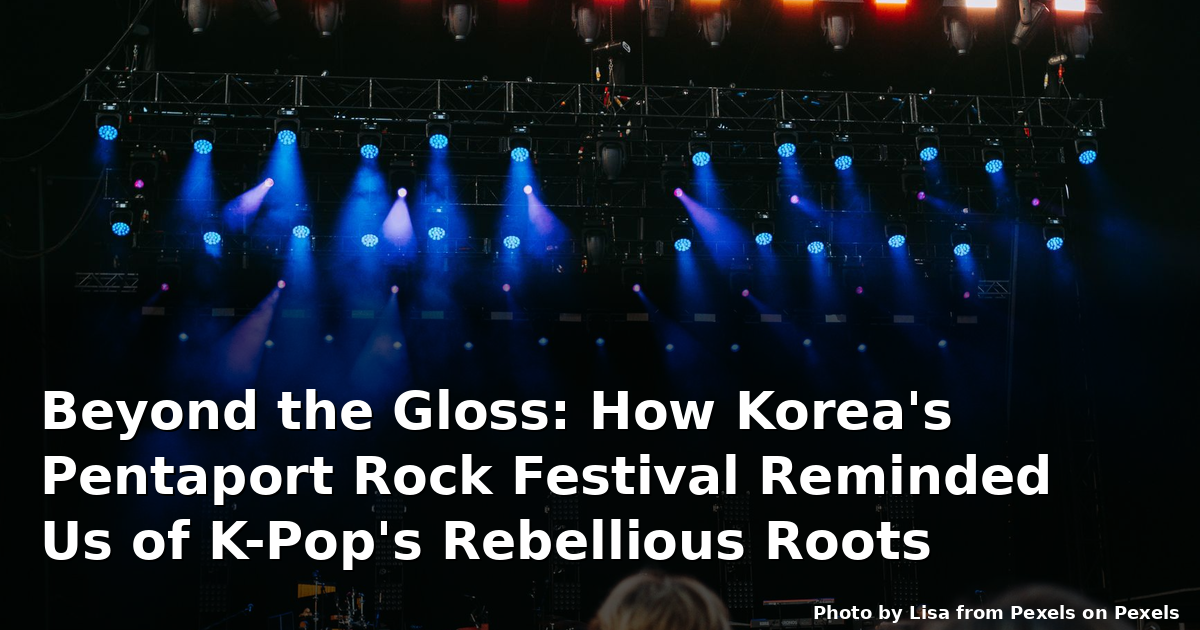
Summer in South Korea is synonymous with soaring temperatures, delicious iced lattes, and an absolute explosion of outdoor music festivals. Among them, the Incheon Pentaport Rock Festival reigns supreme as a legendary rite of passage for music lovers. But this year, the festival did something much bigger than just deliver high-energy guitar riffs and mosh pits. It delivered a powerful history lesson that shook the audience to its core, bridging the gap between hardcore rock fans, K-pop enthusiasts, and international onlookers alike.
For those unfamiliar with the event, Pentaport is one of South Korea's biggest and longest-running rock festivals. While it attracts massive international acts, its heart beats to the rhythm of the local music scene. This year, a buzz went viral online when a performing band projected striking Korean messages on the massive stage screens. The text read: "K-pop was born during a period of resistance against dictatorship and corruption," followed by, "Where is the new music to ignite the resistance?" For global fans who often view K-pop as a highly polished, apolitical industry, this statement was a thrilling reminder of the rebellious DNA embedded in Korean music history.

The Hidden History: K-Pop's Revolutionary Roots
To understand why these screen messages resonated so deeply, we have to look back at South Korea's turbulent journey toward democracy. During the 1970s and 1980s, under authoritarian military regimes, censorship was severe. Songs were banned for the simplest reasons—sometimes just for sounding "too sad" or "subversive." In response, university students and activists sang Minjung Gayo (protest songs) as they marched for democracy. Music wasn't just entertainment; it was a literal weapon for freedom.
When democracy finally flourished in the late 1980s and 1990s, it paved the way for the birth of modern K-pop. Icons like Seo Taiji and Boys burst onto the scene in 1992, blending hip-hop, metal, and dance music while fearlessly criticizing the rigid Korean education system and societal pressures. They broke the mold and fought against broadcasting censorship boards. The spirit of early K-pop was raw, rebellious, and deeply socially conscious. The message displayed at Pentaport was a direct nod to this legacy, challenging today's artists to keep that fire alive rather than focusing solely on commercial success.

Enter the "Rock-rini": The Warm and Welcoming Festival Vibe
If you think a rock festival sounds intimidating, Korean crowds will completely change your mind. A trending term in Korea right now is "Rock-rini" (록린이). This is a clever portmanteau of the word "Rock" and "Eorini" (meaning child). In Korean internet slang, adding "-rini" to a hobby means you are a complete beginner—like a "K-pop-rini" or a cooking beginner.
What makes Pentaport so special is how quickly these "Rock-rinis" are welcomed into the fold. Reports from the festival ground describe a scene where absolute strangers, who had never listened to a rock song in their lives, found themselves linking arms (a Korean bonding gesture known as eoggae-dongmu) and chanting "Hey!" in perfect unison within just one minute of arriving. The atmosphere is less about elite music snobbery and more about collective joy, safety, and release. It’s a space where K-pop stans, indie lovers, and rock veterans dance together in the summer rain.

Why This Matters to Global Hallyu Fans
As international fans of Hallyu (the Korean Wave), it is easy to get caught up in the glitz of music videos, chart rankings, and idol fashion. However, understanding the social and historical context of Korean music adds a rich, rewarding layer to our appreciation of the culture. Korean music has always been a reflection of the people's resilience.
Whether it is BTS addressing mental health and societal expectations in their lyrics, or indie rock bands screaming their hearts out at Pentaport, the underlying spirit remains the same: music is a powerful tool for connection and change. Next time you listen to your favorite Korean track, remember that the freedom to create and enjoy this music was hard-won by generations of passionate artists and fans who refused to be silenced.
Source: 록 몰라도 1분 만에 어깨동무하고 “어이”…‘록린이’도 빠진 펜타포...


